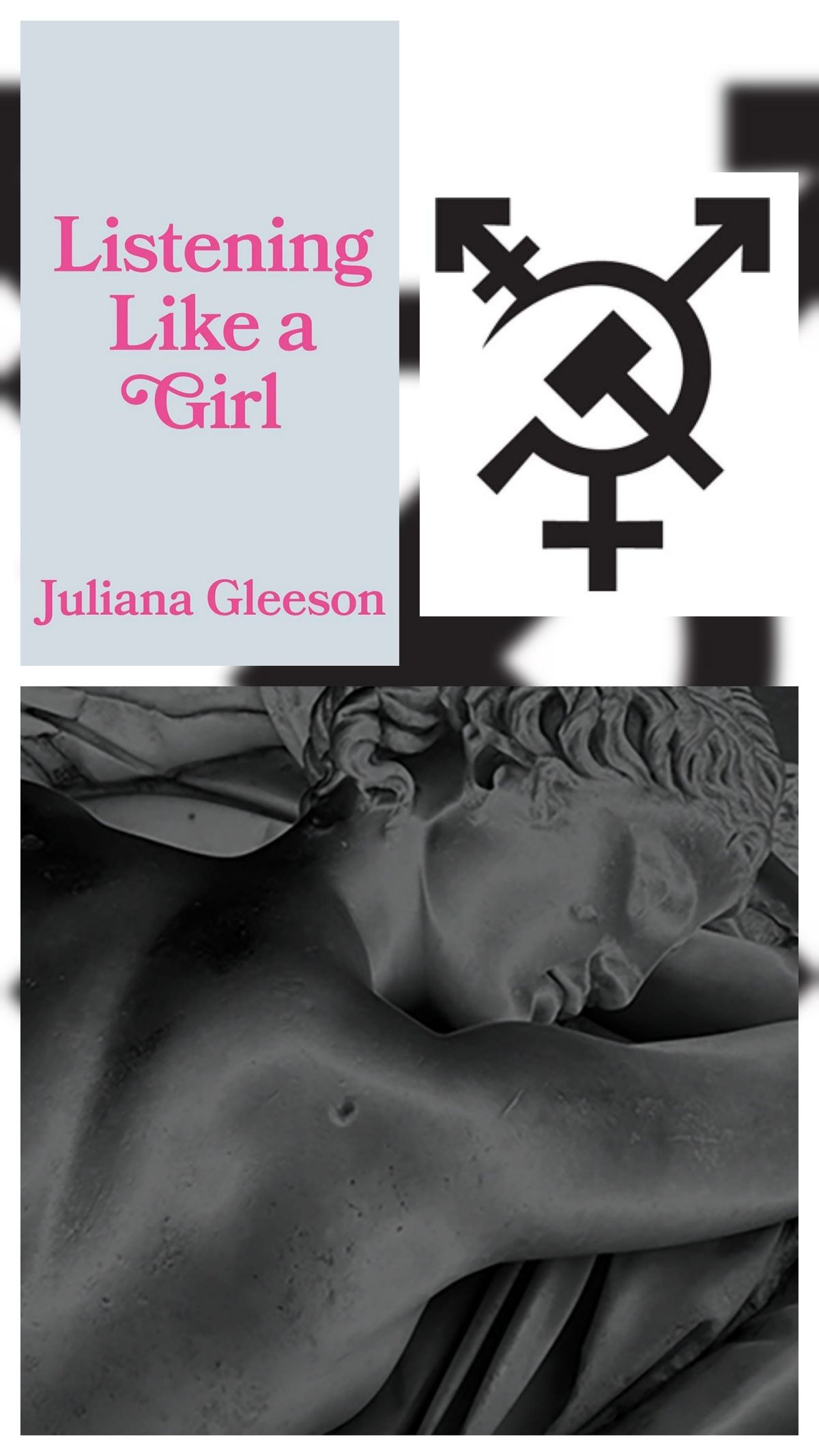
All The Books I've Published (So Far!)
Listening Like A Girl (2026)
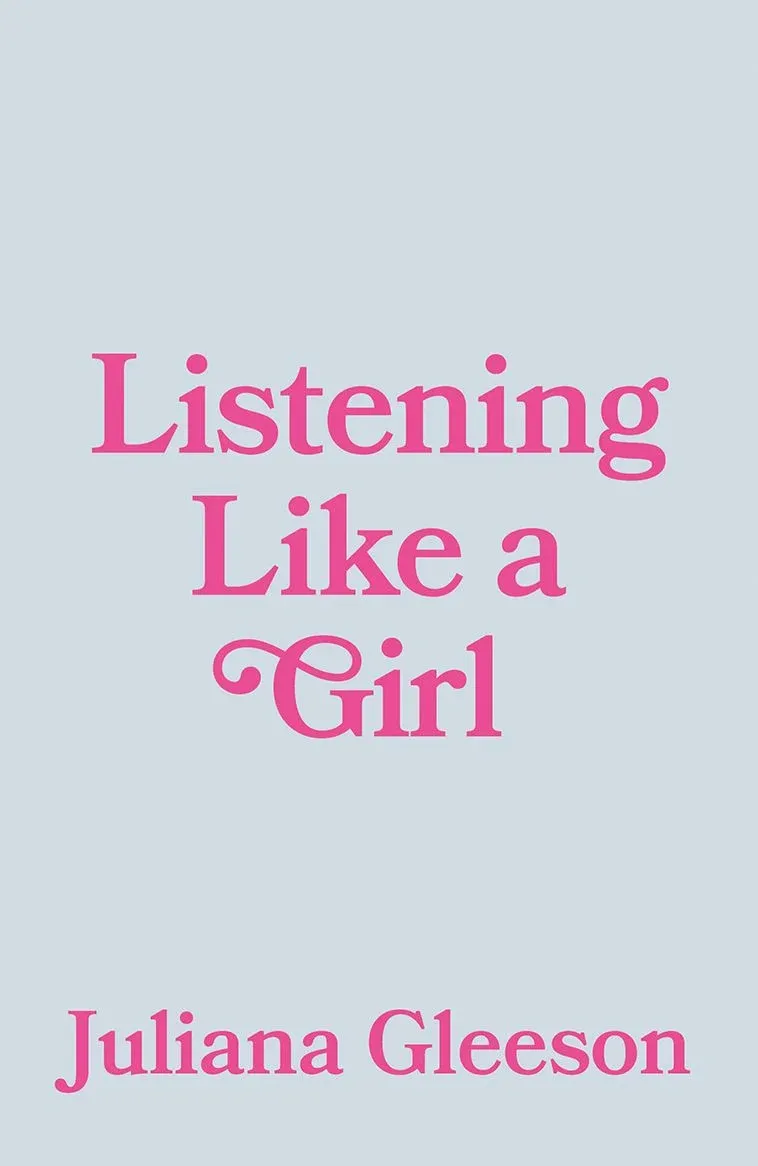
To listen is to be affected. Or we might say: to listen is to take
aboard, and to affect as our own. To be attentive, to devote our
attention to our speaker, and curl ourselves around both their
intended and unwitting meanings.
The force of listening is felt most clearly through its repetition – repeating back refrains as our singsong that speakers might otherwise never have clocked as their own. Themes offered as summaries that guide little lambs back to their flock, and the lost back to their point.
Listening Like A Girl foregrounds the feminine, and the listener...Despite their best efforts to allow themselves to fade into the background.
By hearing out the process of listening at length, the book aims to tease out the feminine as its own quality—and also the feminine as a collective noun best understood their own terms.
As this new account of the feminine continues, the book shifts from feminist philosophy through rich veins of the scandalous and sensuous: perfume, censored literature, rival poets with a shared fixation on sealife, an excruciating fumble of a legendary singer-songwriter caught on film, a diss track against Tracey Emin, and pop music paeans to powerbottoming.
In other words, Listening Like A Girl begins with girls, and with listening, before following them through a fully-fledged canon of the feminine.
Listening... is a work of sensory philosophy. Listening... showcases finding one's voice by giving way to the speaker. Listening... is my second book published by Pluto Press.
To listen closely to someone can be to save them, or afford
them an image of being saved they’d long neglected. To listen this way to someone can help them pick up the pieces of a shattered life – or cause one being wrongly lived to correctly fall apart.
To listen this way strikes deeply, but its motions are delicate:
go on, go on, I can tell you want to say something, here. I can feel it rolling towards the tip of your tongue, even while you hesitate.
You can utter it at your leisure, just between you and me.
This is the faithful face of the active listener. This is what it
means to not only nod along, but really heed someone. This is
the highest power of the feminine.
Hermaphrodite Logic (2025)

Sex is expressive but not self-expressive: it is asserted by ourselves, about ourselves, but it’s also a set of limits overseen by lawyers, medics, priests, fathers, mothers, parliaments.
The revelation provided by intersex struggle shakes the social foundations of clinical and household authority. But in return, it provides us with a new style of thinking: a sarcastic calm in the face of truisms veiling indignity and atrocity. Listen to the unbearable message delivered in deadpan, the uncertain audience drawing a sharp intake of breath. A dark laugh follows at harms done by a brutal twofold split, opening a stranger shape for life beyond it.
Hermaphrodite Logic provides a new history of the intersex movement. The book explores how the formation of intersex communities (during the final years of the 20th century) allowed a rapid challenge to systematic mistreatment. In brief, the book argues:
1) That intersex advocacy followed on rapidly from intersex people meeting one (on and offline) another in the early 1990s.
2) That this new intersex movement developed in conjunction with feminist research, offering a moment of self-consciousness that was spoken to by 90s intersex advocacy's confrontational rhetoric, and caustic wit. (A style that the book calls 90s edgy: defined by disingenuous fluency.)
3) That the intersex movement's protests from 1996 to the present served as a revelation, which challenged professional authority (specifically claims to clinical "management", and objectivity, and rewrote the history of sex (in ways still being processed today). This was achieved by a movement that both rejected the terms loaded upon their physiques by purported experts, and appropriated medical terminology for their own (often satirical) ends. The dismissive stance of the medical establishment towards this challenge (as mere activism) was exactly indicative of how they could not comprehend the revelation being offered to them by the nascent intersex movement.
4) That a movement which first took to the streets in Boston (home of the first American Revolution...) rapidly expanded to take a global form, shifting from an edgy style to formal appeals to shared human rights, and dignity. Today
5) That the intersex struggle cannot be understood in terms of identity, as this was exactly a conceptual framework challenged by it. Yet equally the intersex movement is defined by its parentage: the Aphrodite of gay street struggle, and the Hermes of feminist theory.
All told, the tale is one of a young political movement that enjoyed victories that have been hard to keep up with:
As quickly as the harms done to intersex people were shared between them, whether this really was their inevitable fate became unclear. Organisation between intersex people and the feminist movement not only upset the order of sex, but allowed us to picture another world, and a new science. The harms done to intersex people are not akin to polishing a mirror (to see the true, twofold reflection of sex), but rather an active expression of prejudices that cannot be justified. If distinguishing sex is a process, it’s one we can set into a new form. If sex is expressive, we can choose new songs to sing.
While the harms of ‘normalising’ intersex people have been
made routine, they are the work of history: they can be known,
and ended.
Transgender Marxism (2021)

Transgender Marxism offers not only an account of our experiences as differentiated from the norm, but an analysis of how the state and capital turns these ascriptive distinctions into a material force... To transition is to renege on agreements that were previously assumed, albeit never actually signed for.
A landmark anthology that I co-edited with Elle O'Rourke, bringing together 17 essays exploring transition within class society (and against it...)
Each of these essays were commissioned from comrades we knew to be outstanding thinkers, but who in most cases had been lacking platforms worthy of their insights. Brought together, each chapter was intended to address one concern at full force and in fitting form (adopting whatever style seemed appropriate to the question posed). So interlocking topics from disability, to radical feminism, to racism, to psychoanalysis were also illuminated by these reflections on transition and class struggle.
Our hopes for the book are captured in this extract from the book's much celebrated introduction (which I wrote with Elle):
Transgender Marxism presents trans life as it is lived. Neither figural or instrumental, but unadorned. Not for the sake of fidelity, or ‘representation’ to others. For ourselves, and to best remake the circumstances faced down by workforces worldwide, as well as the ever-swelling ‘industrial reserve army’. For the sake of a proletarian autonomy that does not demand we strip our lives bare of our existing means of survival. For a movement that does not demand we set aside our needs and cravings as distractions from a higher and more righteous cause.
Transgender Marxism leads us not to deny the joys, or ourselves, while equally never allowing ourselves to be deterred from the path of internationalist revolution. Our end is not just a more rigorous understanding of our social afflictions, but fuel for the abolition of what has long been intolerable. What we have suffered was logical, but never necessary. What has been made can be unmade.
Presenting Transgender Marxism as a book was always important to me. While this vein of theory was usually developed in ephemeral online spaces, I reckoned a boldly printed hardcopy could be entertaining to carry and read on public transport, or workplaces.
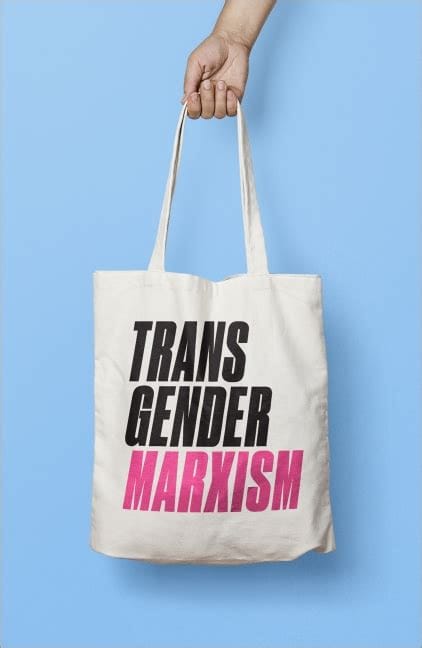
Keeping with this (and their iconic cover) Pluto also produced swag tote bags...
As well as highly influential on anticapitalist struggles and cutting-edge sex scholarship, the collection was a hit in more conventional terms: over the five years since release, sales were over 15K.
This was a free post for Supersensual—Juliana Gleeson's regularly updated writing and touring archive! To best keep up with Juliana, please subscribe to Supersensual. (Or gift a beloved friend!)