
Why did the police raid the Dolls of Berlin last night?
This is a free post for Supersensual. Sign up here for our launch newsletter!
Last night the regular Sunday community meetings of Berlin group The Dolls was raided in Kreuzberg by the city's police.
Caught fully unawares, members of the community were detained inside the space, while the police purloined both their belongings, and the fixed contents of Casa Kuà (a holistic health centre which typically hosts The Dolls.)
The police storming the venue left a number of dolls outside. Unable to access their regular meeting, they quickly reached out to friends and locals to offer support. As the police continued to ransack the building, they were surrounded with an amassing crowd, resulting in what one such protestor described as an "impromptu rally", that began pressing for the release of those held inside the alt-health clinic. As the mass arrest continued inside the building, this crowd of would-be attendees, their friends, and passers-by, swelled to well over one hundred people.
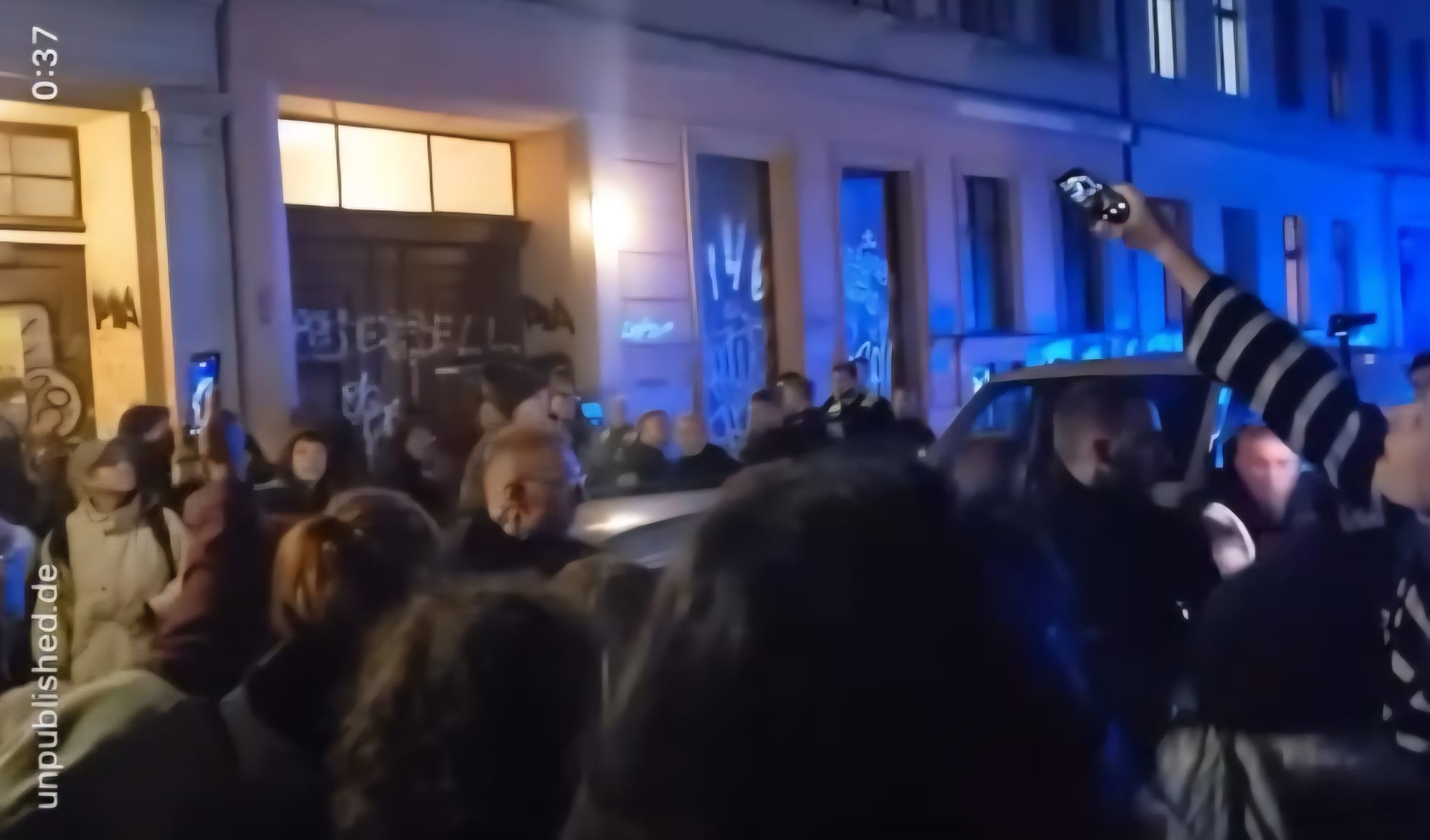
Soon enough crowd greatly outnumbered, and surrounded the police line clamouring for "de-arrest" of the trapped Dolls (as caught in this video by Unpublished.de), until the arrival of further vans of police intent on reinforcing the raid.
This hours-long Kreuzberg stand-off generated a rapid social media sensation circulated through Group Chats and broadcast snapshots. Those turning out to the clinic broadened from dolls & pals, to all LGBTQI people and their allies. At the urging of the raided venue, this protest then relocated to a nearby city square to avoid further escalations with riot police–before dispersing after reports confirming that those interned had been released.
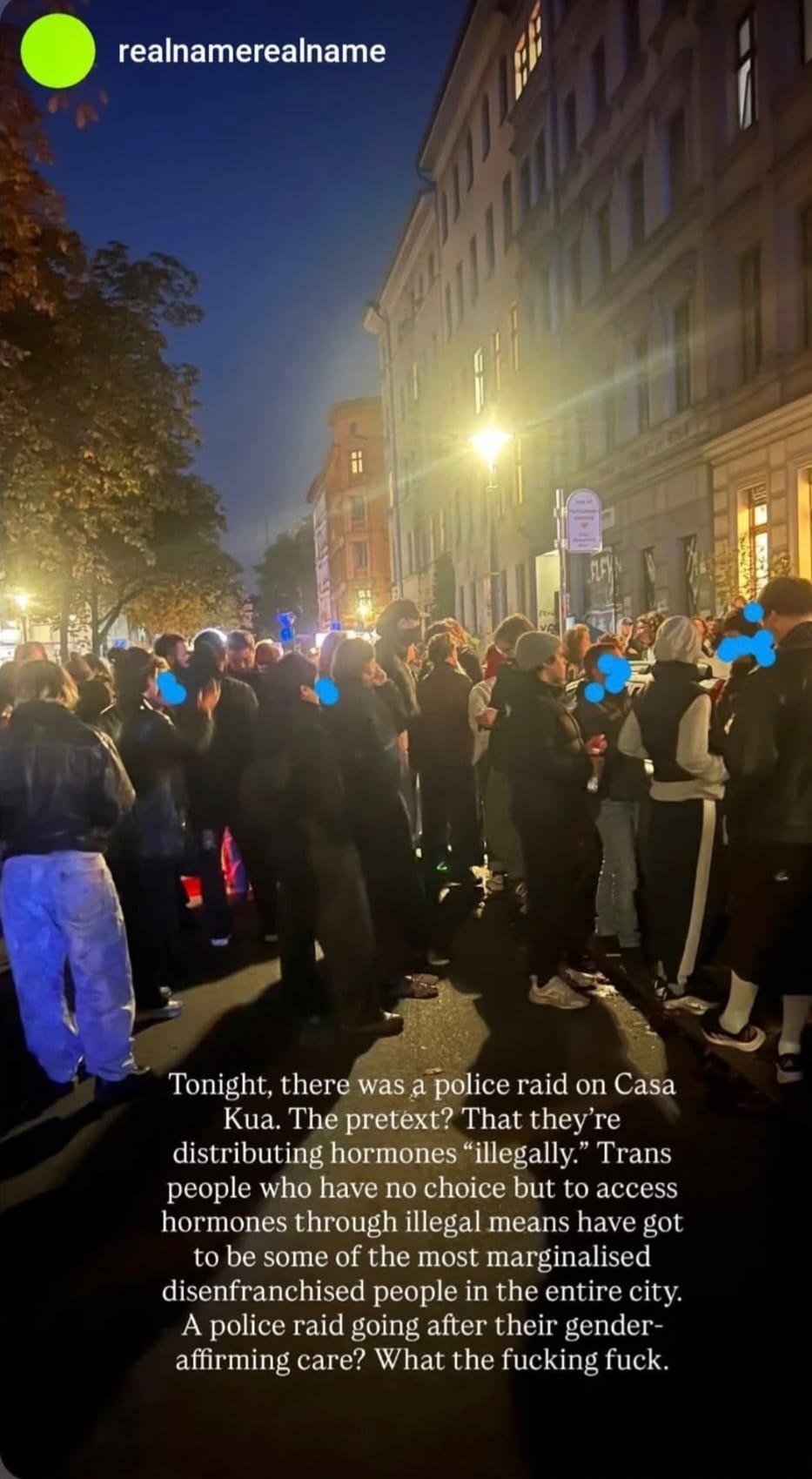
Berlin is typically considered one of the world's capitals for queer life, with the invasive blanket tactics showcased by the police yesterday are more typically reserved for Palestine solidarity organising.
The police's justification for this exceptional force was that The Dolls were illegally sharing Hormone Replacement Therapy with each other (meaning that the personal supplies of all attendees were duly purloined by their arresting officers.)
Whether these allegations of illegal distribution prove to be true is now most likely a matter for Germany's courts.
Speaking personally: the events I've attended at Casa Kuà have covered a broad range of concerns, and run by dedicated intentional communities (rather than the venue) offering reciprocal peer support. These workshops and meet-ups have been run either holistic practioners—making no pretence of other qualifications—or those with conventional medical training (nurses, internist MDs, physio- or speech/language therapists, and so on...) offering strictly pro bono advice.
What happens now?
Sunday's raid caused an intensive response from the LGBTQI community: both condemnations of the police and praise for The Dolls were widespread.
Many viewpoints echoed this one in identifying the raid as a key moment in an apparent backslide toward LGBTQI persecution by the German state targeting a key point of queer infrastructure:
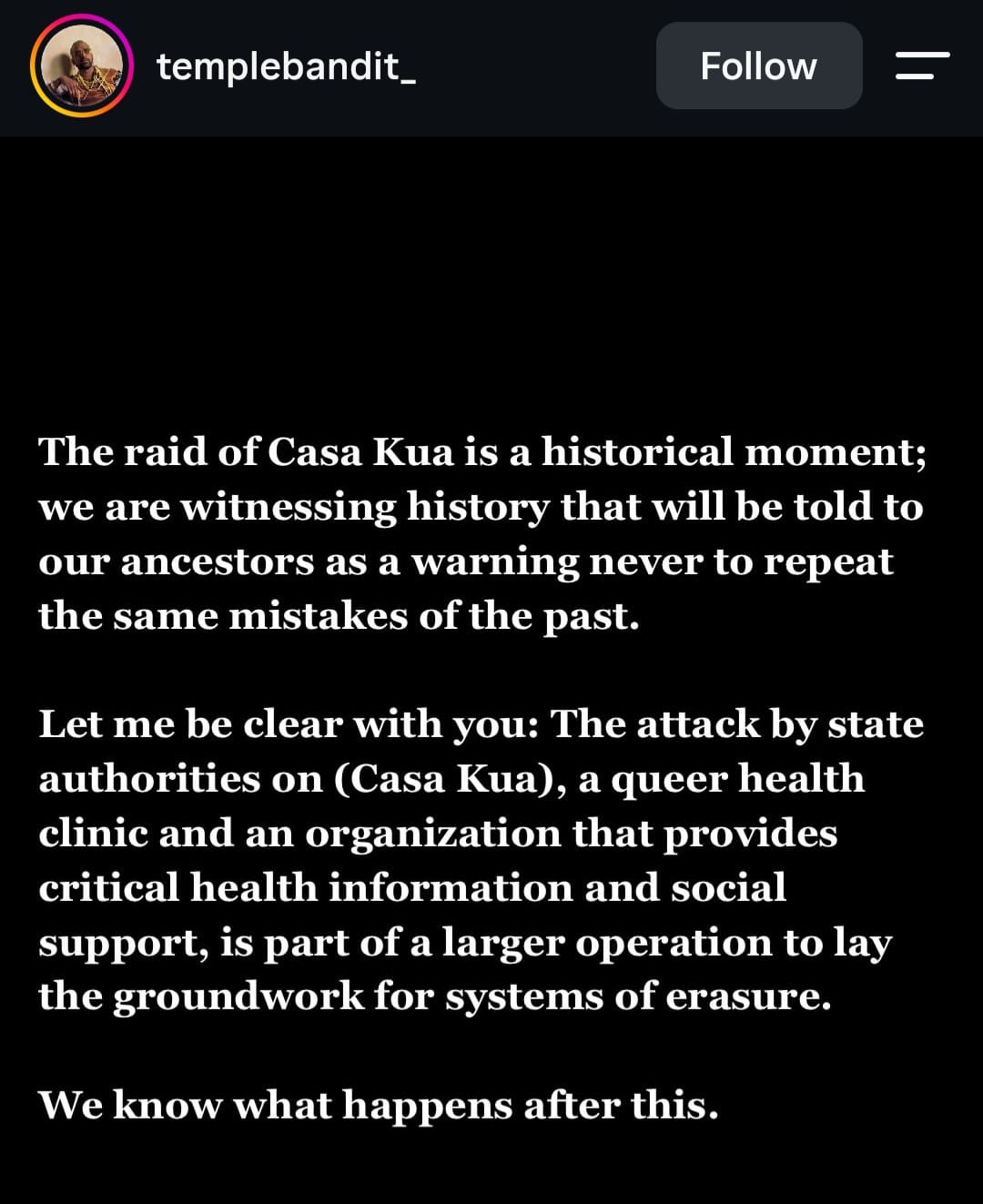
Tributes to both The Dolls and their hosts were widespread, with one regular at the community meeting celebrating the meetings for offering women: 'a respite from the transmisogyny, racism and fascism they face every day'.
One video praised the Casa Kuà for providing 'community and social information' (especially for the city's racialised Queer migrants). Another from local writer Maxi Wallenhorst credited them with having 'changed what the body can do, including for people who've never been.'
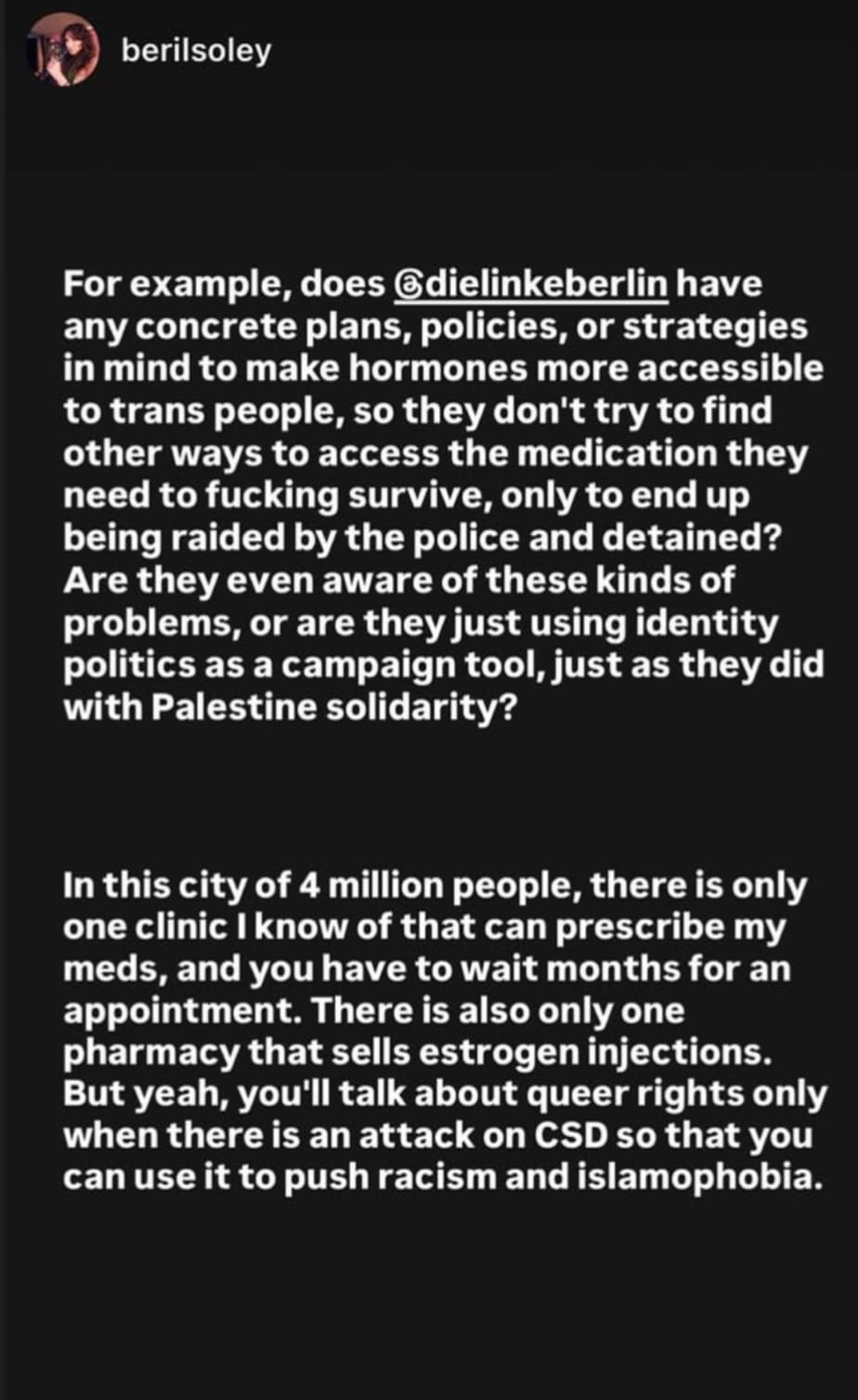
These defences of community healthcare provided by The Dolls and Casa Kuà highlighted their shared resistance to 'systematic gatekeeping'. Many testified to the dire state which these services addressed, which seem especially glaring given Berlin's scale and reputation, with one writing: 'In this city of 4 million people, there is only one clinic I know of that can prescribe my meds, and you have to wait months for an appointment' (after which, only a single pharmacy in the city could fabricate injectable estrogens).

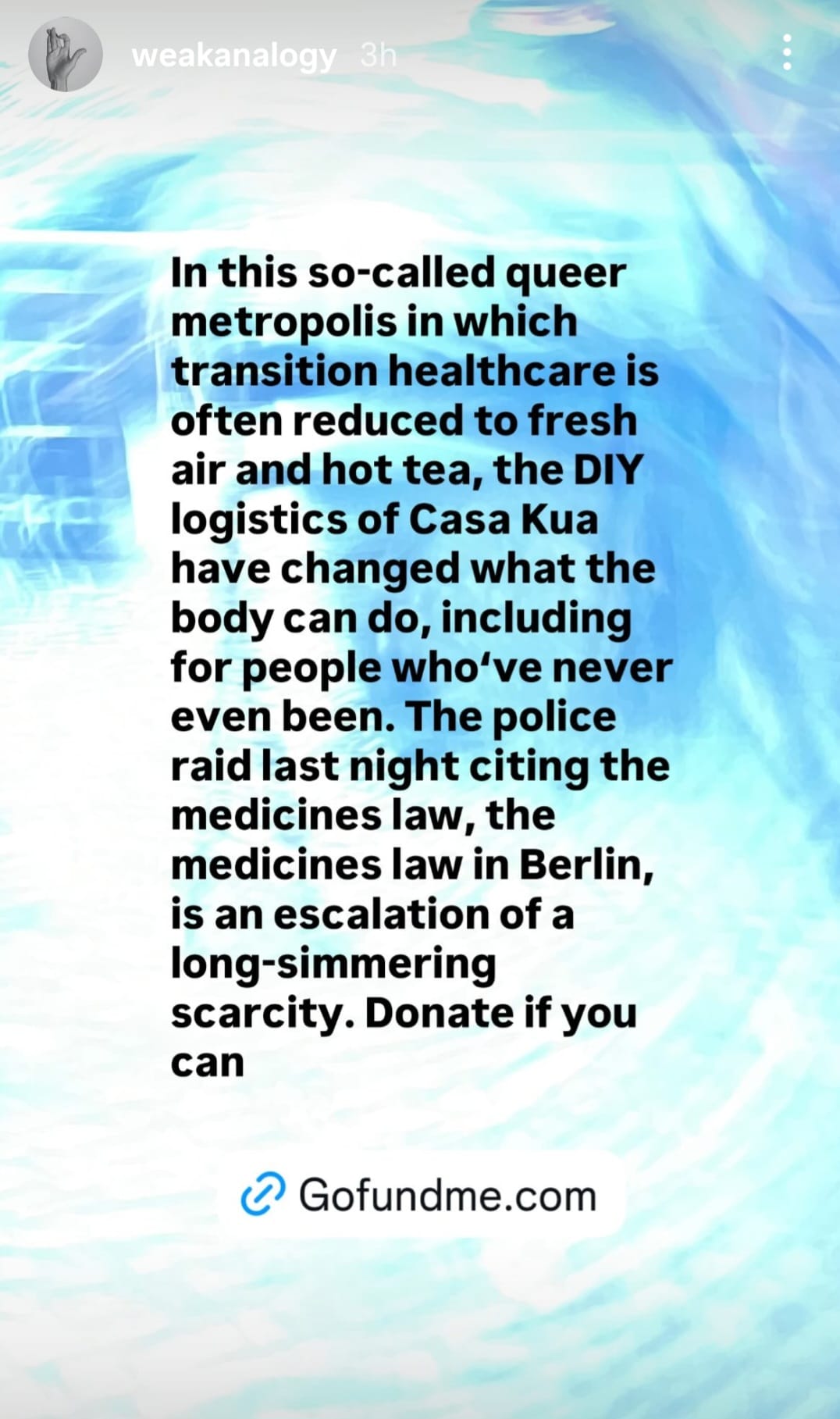
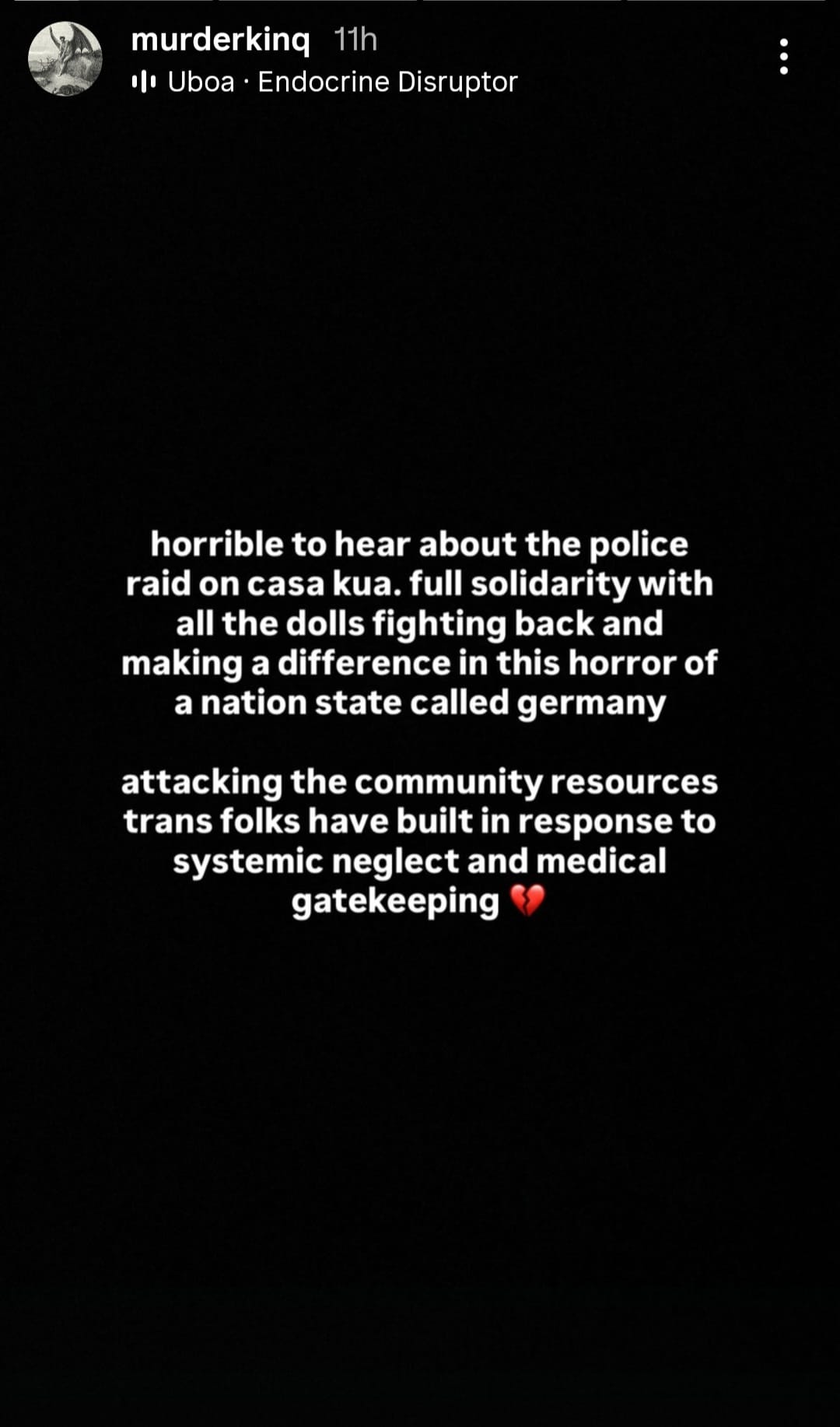
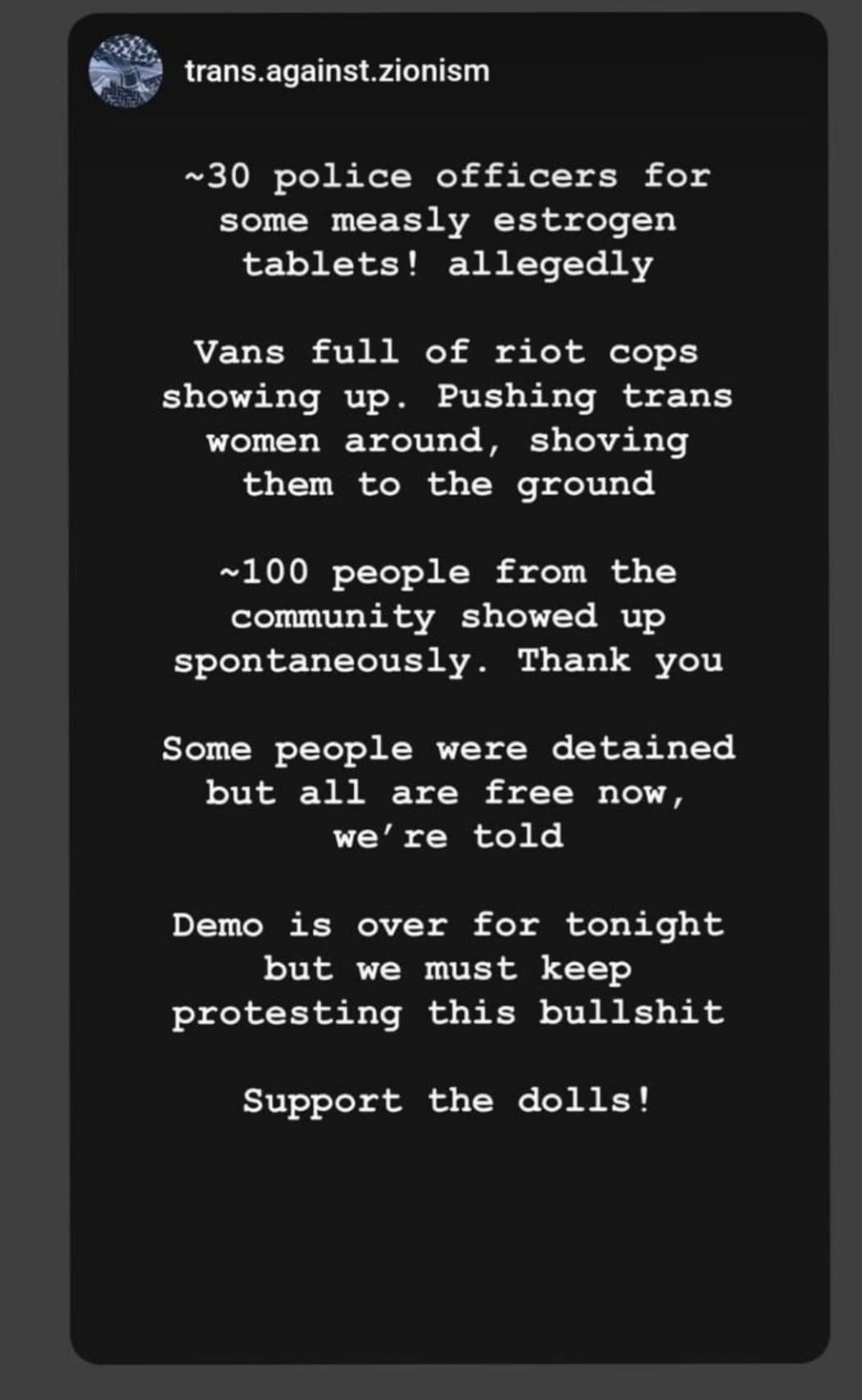
Statements of support were made by local groups including TransSWANA and TRIQ, who stated simply: "Trans Gesundheit Ist Kein Verbrechen - Trans Health Care Is Not A Crime"
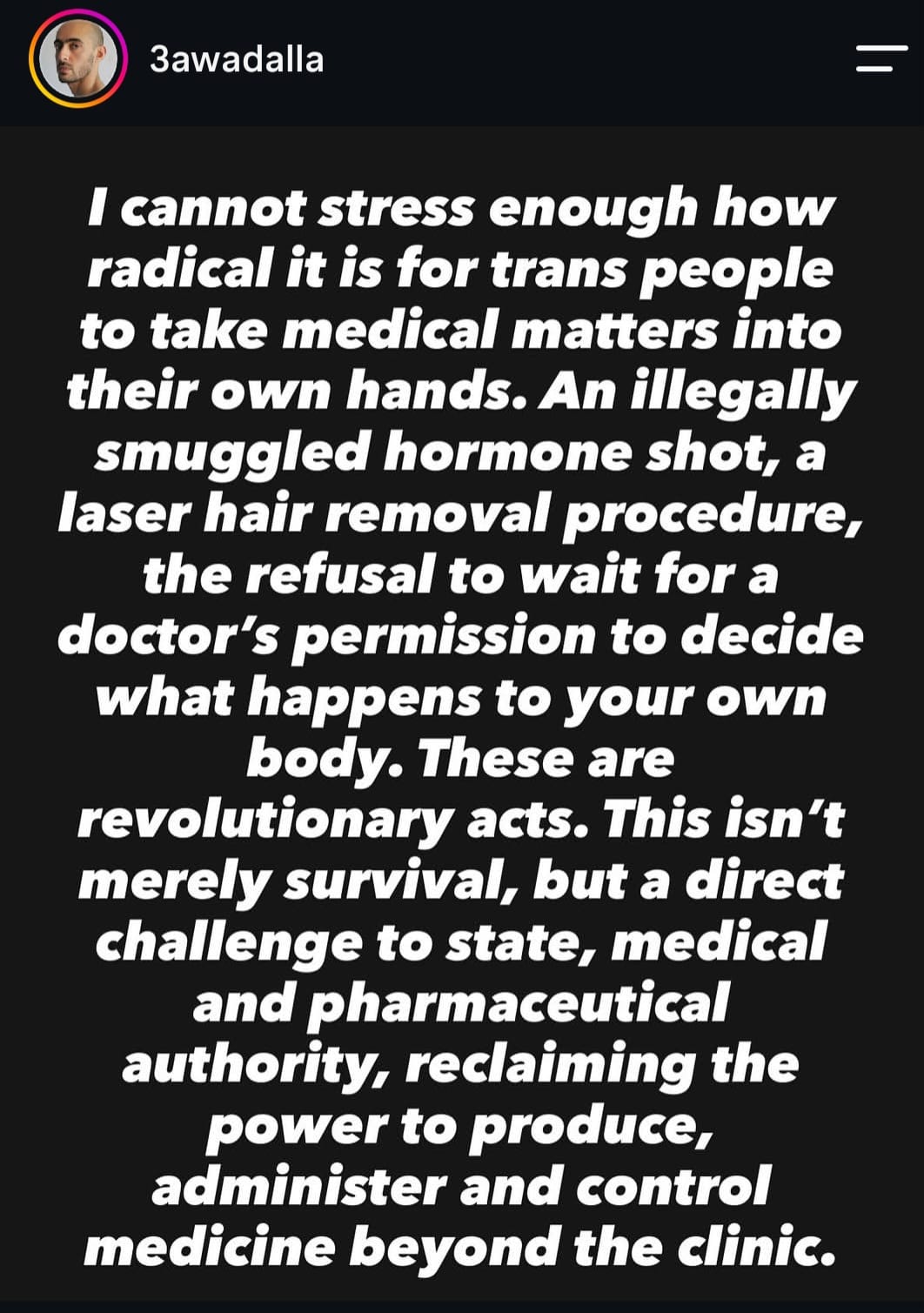
While these accounts were mostly from those who benefitted from these services directly, defences also came from the LGBTQI community more generally. One widely shared Insta-essay from historian and sexual health advocate Awadalla, who openly praised self-medication with a parataxis panoramic:
The police actions also received attention in the popular press. While the initial reports and videos of the raid surfaced on Twitter, unusually for trans affairs the police action was reported in German mainstream media too.
For those motivated to help those facing down the prospect of prosecution, the simplest way to support is through the running fundraiser for The Dolls, or this fundraiser for the venue itself.
(For those based near to Berlin, I'll also include any protest information in my next weekly round-up.)
In the wake of this raid, a full response needs to consider not only the chaos, but the causes. Just why are so many of the innumerable LGBTQI people drawn into Berlin are driven to take their healthcare into their own hands?
Why DIY?
Do Berlin's transsexuals have such an enthusiasm for self-medication due to the local late-night ambience? Is it due to their wide-ranging love for applied bio-chemistry, or amateur endocrinlogy?
A more likely explanation is that DIY practices are exploding across Germany, due to the medical system's total free-fall in providing Hormone Replacement Therapy, and other crucial services for various minorities.
This desperate need for care means that even the threat of arrest is likely to serve as a disruption to self-medication communities (rather than such persecution fully dispersing them.)
Who Self-Medicates?
Berlin increasingly organises community healthcare (from mental health support, to regular community work-out groups) using the acronym TIN (Trans Intersex Non-binary). The Dolls operates on a de facto TIN basis (more edgily describing its remit as mutual aid between not only "transsexuals" but much more obscure identities: through to "hormonal faggots").
While each of these three TIN communities have their own complex health needs and movement histories, clearly none of them have been serviced by the existing healthcare system. Instead across Germany, each of these groups have been left under-provisioned and frustrated, with circumstances becoming markedly worse in recent years.
• Trans people in Berlin have been directly frustrated by the country's peculiar laws around medical provisioning across national borders. This is nowhere more obvious than the case of injectable estrogen. Unlike the rest of the EU, national regulations mean that shipping from the ample of hormones fabricated in chemical powerhouses such as Czechia is expressly forbidden (so long as the required medications are available from anywhere within Germany).
So while notionally available, those wishing to inject their estrogen were reduced to a single apotheke in the north of the city. This year an oil mix-up left even this lone pharmacy out of commission for almost half the year. Under these perverse legal shipping constraints, some more intrepid transsexuals have took trainrides either to Czechia directly, or to Frankfurt (Oder)—where Poland can be reached by walking across a border bridge.
By contrast, "DIY" pharmacies selling homebrew estrogen offer regular deliveries, often at much cheaper price points, fully by-passing these indignities and absurdities (at the price of far less clear assurances around quality oversight).
Beyond these logistical constraints, many trans people have been left with healthcare which lagged markedly in contrast to their rights to correct legal identification. Berlin's reputation as a beacon for liberated living has not resulted in a smooth landing for many migrants attempting to access either healthcare insurance, or specialist care. These shortages and stoppages are especially harsh around mental health, which proves crucial given Germany's unabashedly pathological approach to apportioning trans healthcare provision (with the appropriate diagnosis being solely restricted to a clinically unsound rejection of one's "physical sex").
My first brush with this decrepit corner of healthcare provisioning was accompanying my husband to help escort the refugees she was assigned through a queer NGO. Having searched high and low for the simplest means to get these fledgling dolls and nouveau hommes basic treatment, we found ourselves in a "substitution clinic"—largely focused around providing street drug users methadone and regular testing.
While perhaps startling surroundings the city's newcomers my partner was helping get onto the books there, this clinic was indispensable at that time for being one of only three in town that operated on an "informed consent" basis. (And the only not rumoured to be run by trans clinicians). Their humane treatment of one stigmatised group had led to serving as a rare beacon of respite for another.
On one of our visits I walked through the wrong door, and without a word was handed a paper cup with the opioid rattling (I declined).
Recommending these services to any more newcomers we met could be hazardous: no sooner was a clinic that treated trans people with basic human dignity identified, than it was deluged with would-be patients (backlogs stretching for months, then years, then waiting lists being quietly closed). No rest for the wicked!
• Intersex people in Germany have campaigned since the late 1990s against their systematic mistreatment by the medical establishment. As remains the norm throughout the rest of the world, during childhood intersex people are likely to experience medical treatment which apparently seeks to hide them away, as much as deliver specialist care around their specific health needs. This medical malpractice can establish lifelong mistrust.
Additional to these running dynamics, Germany's legal system insists that intersex and transsexuality be mutually exclusive categories. Any one person can be classified as physiologically intersex, as rejecting their anatomy, but never both. (This situation remains largely unchanged from Angela Kolbe's 2009 essay Intersex, a Blank Space in German Law?) Being diagnosed formally with any intersex variation could therefore be a basis for denial of approval for treatment (especially relevant to surgeries).
As such, those transitioning as such are still required to secure documents denying their variation to confirm treatments being covered by insurers, and authorised by doctors (especially surgeries). Meanwhile, intersex people who are not transitioning are thus left fully outside of the dedicated procedures set down in Germany's guidelines for HRT delivered to trans people (the only equivalent sized population of younger adults receiving such treatments). Largely intersex treatments are instead authorised at the discretion of their medics (Willkur). As well as perverse in light of the intersex movement's continued challenge to hierarchical medical authority, this also ensures a wildly disparate set of treatments, and a reliance on specialists who often exhibit limited expertise.
In my last book Hermaphrodite Logic, I relate how the intersex movement was founded to challenge medical malpractice. Here in Germany, the earliest groups framed their campaigning as opposing violence in paediatric healthcare.

• Non-Binary people in Germany are often concealing their full identities not only from employers (and their families), but from their medics. Given the legal classification of transsexuality places such weight on a rejection of one's sex, the only allowance made for the expansive set of ethical modes we call "non-binary" is a sub-diagnosis where the patient lives as a man one day, and a woman the next.
Attempts to familiarise the medical profession with the fuller truth of non-binary life are something of a double edged sword: without an established pathology of the non-binary, both doctors and judges have called into question on what basis medical treatment might be justifiably delivered (and still more pressingly: paid for).
This specific reasoning has begun to be applied more generally by one of the larger German health insurers, BKK—which has become resisting to covering anything from hormones to surgeries (not only for the non-binary, but also certified transsexuals).
Most non-binary people I've known have taken a literally "buttoned up" attitude towards disclosing their true form to medical practitioners. Given their provision of care is directly dependent on being able to verify that their patients are truly "ill" in the sense requires, any amount of smoothing over and simplifying is the norm in treatment.
The direct consequence is that most practicing physicians administering to the non-binary experience a sustained ignorance around their clients actual needs, practices, and lives. And the consequence from that is that non-binary healthcare advances primarily not through the diligence of medical professionals, but through innovations improvised and roadtested by non-binary people themselves.
The Rise of DIY Pharmacies
All told, the hazy standards of product oversight and quality control held to by "DIY" hormone production lines will not collapse demand for them for as long as they remain:
1) Cheaper
2) More reliable as continuous services (i.e. without months long shutdowns)
3) The exclusive means of sourcing the state-of-the-art in HRT treatment
And there is no question that DIY services currently provide the first and last of these. Even those fortunate enough to live a commutable distance from Berlin's singular pharmacy for injectables are not receiving the state-of-the-art. While German regulations only allow for estrogen valerate (an ester with a shorter "tail", thus requiring injection once every 5-7 days), homebrewing e-pharmacies typically sell estradiol enanthate (one dose needed each 2-3 weeks) or estradiol undecylate (4-6 weeks). Usually, these far more convenient options are available at a lower price that Berlin's valerate.

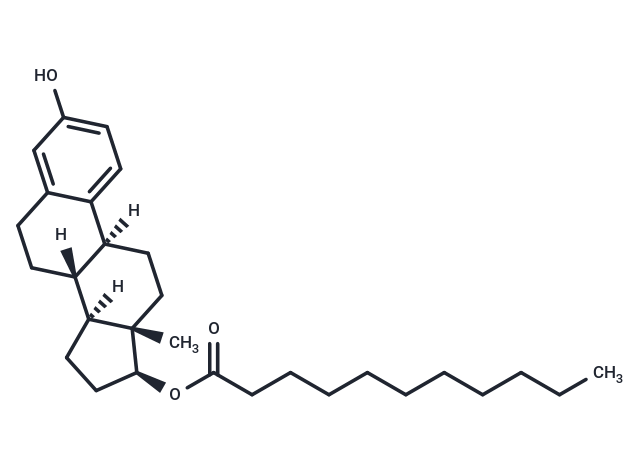
Finally, since they're largely run by-and-for trans people, these services are considerably less likely to be prejudiced towards their customers, than doctors might be their patients. As well as more cheaper, steadier and efficient, self-med is also the means for Berlin's queens to avoid the manifold petty indignities that Berlin's medics and insurers demand of them (for unclear results).
It's under these conditions that self-medication, for any member of Germany's various Trans-Inter-Non communities can seem more sensible than reckless.
This has been a free post for Supersensual. Our free round-up newsletter is launching tomorrow, please sign-up here! This website is made possible through supporters, so please consider taking out a full membership for yourself or a beloved.